Category: Ayurvedic Companies

  • How Ayurvedic Herbal Companies Maintain Product Consistency?

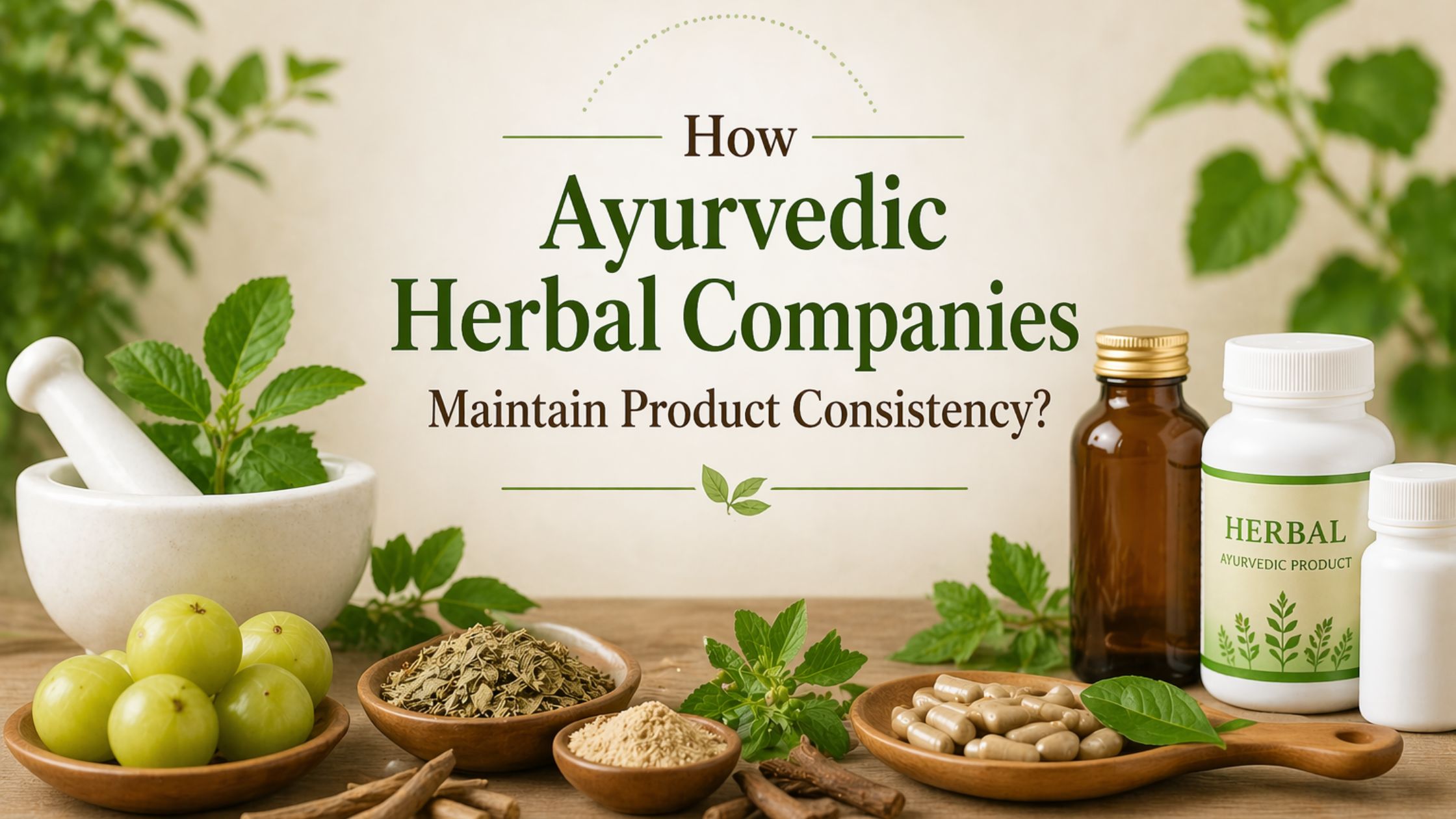
    How Ayurvedic Herbal Companies Maintain Product Consistency?

    Have you ever bought an Ayurvedic supplement, loved the results, and then bought the same product again, only to find it felt completely different?

    You’re not alone. This is one of the most common concerns among Ayurveda consumers today.

    Unlike synthetic drugs with fixed chemical formulas, herbal products deal with nature, and nature varies. The same herb grown in different soils, harvested in different seasons, or processed under different conditions can behave very differently.

    So how do leading Ayurvedic herbal companies manage to deliver the same quality, potency, and safety batch after batch?

    That’s exactly what this article explores.

    Why Product Consistency Is a Real Challenge in Ayurveda?

    Herbal products are inherently complex. A single herb like Ashwagandha or Triphala contains hundreds of active compounds. The concentration of these compounds can shift based on:

    • Soil quality and growing region
    • Harvesting season and time
    • Post-harvest handling and drying methods
    • Storage conditions before processing

    According to the World Health Organization (WHO), standardisation of herbal medicines is essential to ensure their safety, efficacy, and quality [1]. Without a strict quality system, even a well-known herbal formula can produce inconsistent results.

    This is why manufacturing practices, not just raw ingredients, define a truly reliable Ayurvedic company.

    Key Methods Ayurvedic Companies Use to Maintain Consistency

    1. Standardised Raw Material Sourcing

    It starts at the very beginning, where and how the herbs are sourced.

    Reliable companies work with the same trusted suppliers across regions. They set defined specifications for every raw material, including:

    • Moisture content levels
    • Active compound percentages
    • Absence of heavy metals and pesticides
    • Microbiological safety parameters

    Raw materials are tested before they ever enter the manufacturing floor. This step alone eliminates a huge source of variation.

    2. GMP-Certified Manufacturing Processes

    Good Manufacturing Practice (GMP) is the backbone of product consistency.

    GMP guidelines, endorsed by both AYUSH (Ministry of Ayurveda, Yoga & Naturopathy, Unani, Siddha and Homeopathy) and WHO, define how a manufacturing facility must operate, from cleanliness standards to equipment calibration, from staff training to documentation [2].

    Under GMP:

    • Every batch follows an identical, written Standard Operating Procedure (SOP)
    • Equipment is cleaned and validated between batches
    • Environmental conditions like temperature and humidity are controlled
    • Each step is recorded and traceable

    A company operating under GMP-certified collaboration ensures that what’s on the label matches what’s in the bottle every single time.

    3. In-Process Quality Checks

    Good companies don’t just test the final product. They monitor quality at every stage of production.

    This includes:

    • Checking raw material identity using thin-layer chromatography (TLC) or HPLC
    • Testing intermediate products for pH, viscosity, and active compound levels
    • Running microbial and stability tests on finished goods

    This multi-stage approach is part of Good Laboratory Practice (GLP), a companion standard to GMP that governs how testing is conducted [3].

    4. Batch-to-Batch Standardisation Using Reference Standards

    Leading herbal companies maintain reference standards — scientifically validated benchmarks for each product. Every new batch is tested against these standards before it is approved for release.

    This is how companies ensure:

    • The same potency across different production runs
    • Predictable effects for the end consumer
    • Compliance with DCGI (Drug Controller General of India) requirements

    Without these reference standards, “consistency” is just a marketing word. With them, it becomes a measurable, verifiable commitment.

    5. Stable Storage and Packaging

    Even a perfectly manufactured product can degrade if stored improperly.

    Temperature, humidity, and light are the biggest enemies of herbal stability. Top Ayurvedic companies invest in:

    • Climate-controlled, spacious warehouses
    • Moisture-proof and UV-resistant packaging
    • Clearly marked expiry and batch codes for traceability

    Proper storage is not just a logistical detail; it’s a quality assurance measure.

    6. Regulatory Compliance and Third-Party Audits

    Consistent companies welcome scrutiny. They subject themselves to:

    • Regular audits by AYUSH licensing bodies
    • ISO certification reviews
    • Independent third-party lab testing

    This creates a system of accountability that goes beyond internal promises.

    The Role of Ayurvedic Third-Party Manufacturing

    Many brands in India today work through an Ayurvedic third-party manufacturing company model where a dedicated manufacturing partner handles production while the brand focuses on marketing and distribution.

    This model actually supports consistency, provided the manufacturing partner maintains:

    • Robust GMP and GLP standards
    • Transparent documentation
    • Strong raw material supply chains
    • Regulatory compliance across all product categories

    Choosing the right manufacturing partner is therefore one of the most important decisions an Ayurvedic brand can make.

    About Zoic Pharmaceuticals – Our Company

    Our company, Zoic Pharmaceuticals, is a Mohali-based Ayurvedic and herbal wellness company with more than 35 years of experience in the industry. Operating from Mohali, we have built a reputation for delivering herbal products that meet the highest standards of quality and safety.

    We operate through GMP and GLP-certified manufacturing collaborations, supported by ISO certification that reflects our commitment to consistent, compliant production. Our spacious, well-maintained warehouses ensure that products are stored under ideal conditions from manufacturing to dispatch. Our wide range of herbal and Ayurvedic products has been approved by DCGI, giving our partners and customers confidence in both safety and efficacy.

    Over three decades, we have grown into a trusted name for businesses across India looking for reliable Ayurvedic product solutions from formulation to final delivery.

    Why Choose Zoic Pharmaceuticals?

    • 35+ years of proven expertise in Ayurvedic and herbal manufacturing
    • GMP & GLP manufacturing collaboration for batch-to-batch consistency
    • ISO certified – a verified mark of quality and process compliance
    • DCGI-approved product range – legally compliant and market-ready
    • Spacious warehousing – products stored in optimal conditions
    • State-of-the-art manufacturing collaboration – modern equipment, standardised processes
    • Pan-India service reach – serving businesses from all corners of India

    If you are exploring a partnership with the best Ayurvedic product company in India, Zoic Pharmaceuticals offers the credibility, infrastructure, and expertise that growing Ayurvedic brands deserve.

    How Consistency Builds Consumer Trust

    When a product works the same way every time, consumers trust it.

    This is especially important in Ayurveda, where effects may be subtle and build over time. An inconsistent product creates doubt. A consistent one builds loyalty.

    Businesses that partner with an Ayurvedic franchise company in India must prioritise consistency as a non-negotiable quality marker because, in wellness, trust is everything.

    Research published in the Journal of Ethnopharmacology highlights that standardisation and quality assurance are directly linked to consumer satisfaction and long-term adoption of herbal medicines [3]. This is not just an industry talking point; it is backed by evidence.

    Practical Tips: What to Look for in a Consistent Ayurvedic Product

    Whether you are a consumer or a business partner, here is what signals true product consistency:

    • The batch number and manufacturing date are clearly printed
    • GMP-certified or GMP-collaborative manufacturer
    • DCGI or state drug authority approval
    • Standardised extract mentioned on the label (e.g., “standardised to 5% withanolides”)
    • Third-party lab testing is mentioned or available on request
    • Stable packaging – airtight, moisture-resistant, and tamper-proof

    These are practical signals you can look for without needing a laboratory.

    Are you looking to launch or grow an Ayurvedic product line?

    Whether you need help with product development, third-party manufacturing, or franchise expansion, Zoic Pharmaceuticals is here to support your journey.

    Call us: 98158-46085
    Email: info@zoicpharmaceuticals.com
    Visit: Plot No. 194, Sector 82, JLPL Industrial Area, Mohali
    Working Hours: Monday – Saturday | 9:00 AM – 6:00 PM

    Contact India’s best Herbal PCD franchise today and take the first step toward building a consistent, quality-driven Ayurvedic brand.

    If you are considering an Ayurvedic PCD Pharma Franchise, make sure your partner brings both heritage and modern quality systems to the table, exactly what our company delivers.

    Conclusion

    Consistency in Ayurvedic herbal products is not a happy accident; it is the result of deliberate systems, rigorous standards, and a genuine commitment to quality.

    From responsible raw material sourcing to GMP manufacturing, in-process testing, proper storage, and regulatory compliance, every step matters. Companies that get this right earn something money cannot buy: consumer trust.

    If you are a business looking to build or scale an Ayurvedic product line, your manufacturing partner’s quality systems are as important as your product idea itself.

    Choose wisely. Choose quality. Choose consistency.

    To explore further, you can also check our group websites: Zoicayurveda for 3rd-party Ayurvedic and herbal cosmetic manufacturing; Zoic Biotech for nutraceuticals, softgels, gummies, and chemical cosmetics; and Biozoc for allopathic and drug PCD franchise opportunities.

    Frequently Asked Questions

    Q1. What does product consistency mean in Ayurvedic manufacturing? 

    Product consistency means that every batch of an Ayurvedic product has the same potency, composition, appearance, and safety profile as every previous batch. It is achieved through standardised raw materials, GMP processes, in-process testing, and proper storage.

    Q2. How do I know if an Ayurvedic product is manufactured under GMP standards? 

    Look for GMP certification or mention of GMP-collaborative manufacturing on the product label or company website. Products approved by DCGI or licensed under AYUSH guidelines are also good indicators of manufacturing quality.

    Q3. What is the role of AYUSH in regulating Ayurvedic product quality? 

    The Ministry of AYUSH sets the regulatory framework for Ayurvedic medicine in India, including licensing requirements, GMP guidelines, and quality standards. All legally sold Ayurvedic products must comply with Schedule T of the Drugs and Cosmetics Act under AYUSH oversight.

    Q4. Why do Ayurvedic products sometimes feel different across batches? 

    Variation can occur due to differences in raw material quality, harvest season, manufacturing process deviations, or improper storage. Companies that follow strict GMP and GLP standards and test each batch minimise this variation significantly.

    Q5. What should businesses look for when choosing an Ayurvedic manufacturing or franchise partner? 

    Key factors include GMP and GLP manufacturing standards, ISO certification, DCGI-approved product range, regulatory compliance history, transparent documentation, warehousing quality, and the partner’s track record and experience in the industry.

    References

    [1] World Health Organization. WHO Guidelines on Good Manufacturing Practices for Herbal Medicines. Geneva: WHO Press. Available at: who.int

    [2] Ministry of AYUSH, Government of India. Good Manufacturing Practices for Ayurvedic, Siddha, and Unani Medicines – Schedule T, Drugs and Cosmetics Act. New Delhi: Government of India.

    [3] Bent S. Herbal Medicine in the United States: Review of Efficacy, Safety, and Regulation. Journal of General Internal Medicine. 2008; 23(6): 854–859. doi:10.1007/s11606-008-0632-y

    Medical Disclaimer

    The information provided in this article is intended for educational and informational purposes only. It does not constitute medical advice, diagnosis, or treatment. Ayurvedic products and herbal supplements should be used under the guidance of a qualified Ayurvedic practitioner or licensed healthcare professional. Individual results may vary. Always read product labels and consult a certified health professional before starting any herbal supplement, especially if you are pregnant, nursing, have a medical condition, or are taking medications. The content aligns with AYUSH communication guidelines and WHO standards for responsible health information.

  • Is Ayurvedic PCD Franchise a Good Business for Beginners?

    Is Ayurvedic PCD Franchise a Good Business for Beginners?

    The Ayurvedic and herbal wellness industry in India is growing rapidly. More people are becoming health-conscious and preferring natural remedies over synthetic medicines. This growing demand has created huge opportunities for entrepreneurs. However, starting a full-scale Ayurvedic manufacturing unit can be expensive, complex, and time-consuming. Beginners often hesitate due to the high investment, multiple licenses, and technical challenges involved in production.

    For new entrepreneurs, the Ayurvedic PCD franchise model is a safe and practical option. It allows you to start your own business with lower investment, less risk, and strong support from experienced manufacturers. In this blog, we will explain why the Ayurvedic PCD franchise is ideal for beginners and how it helps in building a successful business.

    What Is an Ayurvedic PCD Franchise?

    A PCD (Propaganda Cum Distribution) franchise is a business partnership where a company allows you to sell its products under its brand name in a specific area. The company manages production, packaging, approvals, and quality checks, while you focus on sales, marketing, and local distribution.

    This clear division of responsibilities makes it simple for beginners to start their own business without worrying about the complexities of manufacturing.

    1. Low Investment and Low Risk

    Starting a full-scale Ayurvedic manufacturing business requires large capital, multiple licenses, and trained staff. With a PCD franchise, beginners can start with a smaller investment.

    The products are already developed and approved, which reduces risk. This makes it easier for newcomers to enter the Ayurvedic market with confidence.

    2. Beginner-Friendly Business Model

    The PCD franchise model is designed to be easy to manage. Beginners don’t need prior experience in manufacturing or marketing. The company provides ready-to-sell products and support for promotion.

    Even first-time entrepreneurs can manage:

    • Local sales and distribution
    • Small inventory management
    • Basic marketing activities

    This makes it a perfect starting point for anyone entering the Ayurvedic industry.

    3. Support from Experienced Manufacturers

    Many beginners choose the best Ayurvedic Franchise Company & Best Herbal PCD Company in India for guidance. These companies help partners with:

    • Marketing materials and brochures
    • Product training and workshops
    • Promotional tools and support

    This ensures that even beginners can run the business smoothly and confidently.

    4. High Demand for Ayurvedic Products

    Ayurvedic products are becoming popular due to their natural ingredients and safety. There is a growing demand for:

    • Health supplements
    • Herbal remedies for common ailments
    • Skincare and wellness products

    Partnering with a trusted brand makes selling these products easier for beginners, as the products are already recognised and approved.

    5. Flexible Working Options

    Beginners often worry about balancing work and business. The PCD franchise model offers flexibility. You can start part-time while continuing other work or gradually increase your focus on the business.

    This makes it suitable for:

    • Students or recent graduates
    • Homemakers
    • Professionals looking for a side income

    6. Quality and Compliance Assurance

    Beginners do not need to worry about product safety or legal compliance. Reputed companies work with a certified Ayurvedic Contract Manufacturing Company in India or provide third-party manufacturing of Ayurvedic products.

    This ensures that all products are:

    • Safe and high-quality
    • Fully compliant with Indian regulations
    • Approved for sale across India

    This support helps beginners gain credibility and customer trust quickly.

    7. Monopoly Rights and Area Protection

    Most PCD franchises offer monopoly rights in a designated area. This is especially helpful for beginners because:

    • There is no internal competition in the same area
    • They can focus on building strong local relationships
    • Sales and growth become more predictable and steady

    8. Branding and Marketing Assistance

    Marketing and branding are often challenging for beginners. Good PCD companies provide:

    • Visual aids and product samples
    • Brochures and promotional kits
    • Online marketing support and guidance

    This helps beginners promote their business effectively and attract more customers without spending heavily on advertising.

    9. Long-Term Business Growth

    A PCD franchise is not only a starting point, but it can also become a long-term business. With consistent effort and manufacturer support, beginners can:

    • Expand their reach to multiple cities or states
    • Launch new Ayurvedic products
    • Build a strong brand presence in the market

    10. Support Across PAN India

    Experienced manufacturers help beginners scale their business across PAN India. With consistent supply, quality assurance, and logistical support, even new entrepreneurs can serve customers in multiple regions.

    This makes it easier to achieve national-level growth without setting up your own manufacturing or distribution network.

    Start Your Ayurvedic Business with Expert Guidance

    If you are a beginner planning to enter the Ayurvedic sector, a PCD franchise is a safe and practical option. Focus on product quality, ethical practices, and strong manufacturer support for long-term growth.

    Contact India’s best Herbal PCD franchise to connect with trusted manufacturers and start your journey toward building a successful Ayurvedic business today.

    To explore more, you can also check our group websites: Zoicayurveda for 3rd party Ayurvedic and herbal cosmetic manufacturing, Zoic Biotech for nutraceuticals, softgels, gummies, chemical cosmetics, and Biozoc for allopathic and drug PCD franchise opportunities.

    Frequently Asked Questions

    1. Can beginners start an Ayurvedic PCD franchise?
      Yes, it is ideal for beginners because companies provide ready products, guidance, and marketing support.
    2. Is prior experience required?
      No, beginners can manage with basic business knowledge and company support.
    3. How much investment is needed?
      Investment is lower than starting a manufacturing unit and varies based on the product range and area coverage.
    4. Do manufacturers provide marketing support?
      Yes, most companies provide visual aids, brochures, samples, and online marketing guidance.
    5. Can this business grow long-term?
      Yes, with consistent effort and strong manufacturer support, a PCD franchise can expand across regions and become a sustainable business.
  • Ayurvedic PCD Franchise vs Allopathic PCD Franchise: Which Is Better for You?

    Ayurvedic PCD Franchise vs Allopathic PCD Franchise: Which Is Better for You?

    Starting a pharma franchise is a big step toward building a stable and respected business. Today, many people entering the pharma industry find themselves choosing between an Ayurvedic PCD franchise and an Allopathic PCD franchise. Both options are well-established, trusted, and profitable when handled correctly.

    Instead of asking which one is better overall, the more important question is: which one is better for you, your experience, your market, and your long-term goals? This blog explains both franchise models in a clear, friendly, and easy-to-understand way so you can make a confident decision.

    Understanding the Core Difference

    Ayurvedic PCD Franchise – A Wellness-Oriented Model

    An Ayurvedic PCD franchise focuses on herbal and plant-based formulations inspired by traditional healthcare knowledge. These products are commonly used for daily wellness, immunity support, digestion care, skin health, and lifestyle balance.

    Many reliable brands work closely with an Ayurvedic Contract Manufacturing Company in India to ensure consistent product quality, proper certifications, and safe formulations. This model supports long-term health awareness and preventive care.

    Allopathic PCD Franchise – A Treatment-Oriented Model

    An Allopathic PCD franchise deals with modern medicines that doctors prescribe for treating infections, chronic diseases, pain, and acute health conditions. These products are widely used in clinics, hospitals, and nursing homes.

    Allopathic medicines are known for their quick action and strong clinical acceptance. This model plays a vital role in everyday medical treatment and emergency care.

    Both models serve healthcare in different but equally important ways.

    Market Demand and Consumer Acceptance

    Ayurvedic Market Demand

    Ayurvedic products are seeing strong growth because:

    • People prefer natural and herbal solutions
    • Wellness and immunity are top priorities
    • Products are suitable for long-term use

    The growth of third-party manufacturing of Ayurvedic products has also made it easier for new brands to offer high-quality formulations without heavy infrastructure investment.

    Allopathic Market Demand

    Allopathic medicines continue to have steady and essential demand due to:

    • Regular prescriptions by doctors
    • Need for treatment-based solutions
    • Constant requirement in hospitals and clinics

    This makes allopathic franchises a reliable and long-term business option.

    Investment and Business Entry Level

    Ayurvedic Franchise Business

    • Lower to moderate initial investment
    • Easy product explanation
    • Strong repeat usage

    Allopathic Franchise Business

    • Moderate investment
    • More competitive markets
    • High-volume product movement

    Both models can be profitable when supported by the right company and market strategy.

    Ease of Promotion and Daily Operations

    Ayurvedic Promotion Style

    • Simple communication
    • Focus on wellness education
    • Suitable for chemists and direct customers

    Allopathic Promotion Style

    • Doctor-based promotion
    • Requires medical product knowledge
    • Strong professional relationships

    Choose the model that matches your communication skills and comfort level.

    Compliance and Quality Standards

    • Ayurvedic products follow AYUSH guidelines
    • Allopathic medicines follow drug authority rules

    Both require proper labelling, documentation, and quality checks. With a supportive company, compliance becomes easier and smoother in both segments.

    Profitability and Long-Term Growth Potential

    Ayurvedic franchises often offer:

    • Strong margins on wellness products
    • Growing customer trust
    • Long-term brand loyalty

    Allopathic franchises offer:

    • Consistent prescription demand
    • Essential medicine sales
    • Stable income flow

    Partnering with the best Ayurvedic Franchise Company & Best Herbal PCD Company in India or a reliable allopathic company ensures product quality, marketing support, and timely supply.

    Which Franchise Model Should You Choose?

    Both Ayurvedic and Allopathic franchises are good business options. The right choice depends on your vision.

    Choose an Ayurvedic PCD franchise if you:

    • Prefer herbal and wellness products
    • Want simpler promotion
    • Target long-term health awareness

    Choose an Allopathic PCD franchise if you:

    • Have pharma field experience
    • Are comfortable with doctor visits
    • Want treatment-based product demand

    Many successful pharma entrepreneurs eventually operate in both segments.

    Start Your Pharma Franchise Journey with Confidence

    If you are planning to start your pharma franchise journey, take time to understand both models clearly. Focus on quality products, ethical business practices, and long-term growth rather than quick profits.

    Contact India’s best Ayurvedic PCD franchise to connect with trusted pharma partners and choose a franchise model that aligns with your goals, experience, and market demand.

    To explore more, you can also check our group websites: Zoicayurveda for 3rd party Ayurvedic and herbal cosmetic manufacturing, Zoic Biotech for nutraceuticals, softgels, gummies, chemical cosmetics, and Biozoc for allopathic and drug PCD franchise opportunities.

    Frequently Asked Questions

    1. Are both Ayurvedic and Allopathic PCD franchises profitable?
      Yes, both can be profitable with the right company support and market strategy.
    2. Is an Ayurvedic franchise suitable for beginners?
      Yes, it is often easier to start due to simple promotion and growing demand.
    3. Does the Allopathic franchise need medical knowledge?
      Basic product understanding helps, but company training usually supports new partners.
    4. Can I expand into both models later?
      Yes, many franchise owners diversify once they gain experience.
    5. How important is company support?
      Very important. Good support ensures quality, supply consistency, and smooth operations.
  • Future of Ayurvedic Franchise Business in India: Trends, Growth and Opportunities

    Future of Ayurvedic Franchise Business in India: Trends, Growth and Opportunities

    India is experiencing a strong shift toward holistic wellness, natural healing, and preventive healthcare – and Ayurveda is leading this transformation. Ayurvedic medicines, supplements, and personal care products have seen massive growth in popularity over the last decade, making the Ayurvedic franchise business one of the most profitable and stable opportunities in the healthcare sector.

    As we move into 2026 and beyond, the Ayurvedic market is expected to grow even faster due to rising consumer awareness, government support, and global acceptance. If you plan to enter this industry, now is the best time. Here’s a quick look at the future of the Ayurvedic franchise business in India, along with trends, growth drivers, and key opportunities.

    1. Rising Demand for Natural and Preventive Healthcare

    People today actively seek natural, chemical-free, and side-effect-free health solutions. This shift is driven by:

    • Rising stress
    • Lifestyle disorders
    • Increased awareness of long-term wellness
    • Preference for plant-based supplements
    • Preventive and immunity-building habits

    Ayurvedic products such as immunity boosters, digestive supplements, pain-relief oils, gut-health syrups, and herbal cosmetics are now trusted by millions of households. This growing demand forms a strong foundation for franchise businesses to grow exponentially.

    2. Explosion of Ayurvedic Product Categories

    Earlier, Ayurveda was limited to classical medicines. Today, the industry has evolved into multiple high-demand product segments, including:

    • Herbal cosmetics
    • Ayurvedic nutraceuticals
    • Personal care products
    • Wellness powders and juices
    • Haircare and skincare products
    • Immunity and detox supplements
    • Pain management and joint health remedies

    With such a wide portfolio, distributors and franchise partners can earn high margins while catering to diverse customer needs. This is why partnering with a strong herbal PCD franchise company is becoming more valuable for entrepreneurs.

    3. India’s Ayurvedic Market Will Cross Multi-Billion Dollar Growth

    The Indian Ayurvedic market is projected to grow at 15%+ CAGR, driven by both domestic and international demand. Factors contributing to this growth include:

    • Government initiatives supporting Ayurveda through AYUSH
    • Global trust in Indian herbal formulations
    • A booming wellness tourism industry
    • Massive export opportunities
    • Rising use of Ayurvedic supplements in daily lifestyles

    This growth ensures long-term stability, making the Ayurvedic franchise business one of the safest investments for new entrants.

    4. Digital Adoption Is Transforming the Ayurvedic Industry

    From e-commerce platforms to digital consultations, Ayurveda has adapted beautifully to modern technology. Businesses now sell and promote Ayurvedic products through:

    • Social media
    • Influencer marketing
    • Online marketplaces
    • AI-backed search platforms
    • Health apps and portals

    This digital transformation is helping Ayurvedic franchises reach a larger audience and build strong brand visibility without heavy investment.

    5. Low Investment, High Profit Business Model

    One of the biggest advantages of the Ayurvedic franchise model is its affordability. Starting a franchise requires minimal investment compared to other healthcare ventures. You don’t need a manufacturing unit, a large team, or heavy machinery.

    Your major costs include:

    • Product procurement
    • Basic storage and inventory
    • Marketing and distribution

    Because Ayurvedic products have consistent demand and repeat customers, the profit margins remain strong and sustainable.

    6. Scope for Custom Products Through Contract Manufacturing

    Many franchise owners today expand their portfolio by launching their own branded Ayurvedic products. This is possible through a reliable Ayurvedic Contract Manufacturing Company in India, which helps businesses create unique, high-quality formulations without needing production setups.

    This adds flexibility, brand visibility, and long-term business growth.

    7. Third-Party Manufacturing Is Becoming a Major Growth Engine

    To meet growing demand, more entrepreneurs are using third-party manufacturing of Ayurvedic Products.
    Benefits include:

    • Zero manufacturing stress
    • Faster production
    • High-quality packaging
    • Ability to scale quickly
    • Cost savings

    This model allows franchise owners to focus purely on sales, distribution, and business expansion while experts handle manufacturing.

    8. Growing Global Acceptance of Ayurvedic Products

    Ayurveda is no longer limited to India. It is becoming popular in:

    • USA
    • Europe
    • Middle East
    • Australia
    • Asia-Pacific

    With increasing exports and global recognition, Indian Ayurvedic franchises stand to benefit from international trust and market stability.

    9. Choosing the Right Ayurvedic Franchise Partner Matters

    As the industry grows, competition among companies is rising. Choosing the right brand plays a major role in your success.

    The best Ayurvedic Franchise Company & Best Herbal PCD Company in India offers:

    • WHO-GMP certified manufacturing
    • Monopoly rights
    • A large product range
    • High-quality packaging
    • Transparent pricing
    • Good margins
    • Fast delivery
    • Marketing & promotional support

    Partnering with a trusted company ensures long-term business success and a strong market presence.

    10. The Future: Ayurveda Will Become a Mainstream Healthcare System

    India’s focus on traditional medicine, global wellness trends, and growing demand for natural healing ensures that Ayurveda will become an even more important part of mainstream healthcare.

    By 2030, experts predict:

    • Ayurvedic franchises will double in number
    • Ayurvedic exports will grow rapidly
    • Governments will introduce more AYUSH-friendly policies
    • Demand for herbal cosmetics and supplements will skyrocket
    • Franchise distributors will enjoy higher market stability

    This makes 2025-2030 one of the best periods to enter the Ayurvedic franchise business.

    Conclusion

    The future of the Ayurvedic franchise business in India is exceptionally bright. With rising health awareness, digital growth, global acceptance, and strong government support, the industry offers unmatched opportunities for new entrepreneurs. Whether you want to start a small distribution network or build a large franchise model, Ayurveda provides endless growth potential with low investment and high profitability.

    Ready to start a fast-growing Ayurvedic franchise business in India?

    Partner with a trusted brand offering premium Ayurvedic medicines, monopoly rights, strong marketing support, and high-profit product ranges.

    Contact India’s best Ayurvedic PCD franchise today to start your profitable wellness business.

    To explore more, you can also check our group websites: Zoicayurveda for 3rd party Ayurvedic and herbal cosmetic manufacturing, Zoic Biotech for nutraceuticals, softgels, gummies, chemical cosmetics, and Biozoc for allopathic and drug PCD franchise opportunities.

    FAQs

    1. Is the Ayurvedic PCD franchise a profitable business?

    Yes, it offers high demand, low investment, and consistent profit margins.

    1. Do Ayurvedic products have a stable market in India?

    Absolutely – demand is growing every year due to lifestyle changes and natural health trends.

    1. What documents do I need to start an Ayurvedic franchise?

    You typically need GST, a drug license (for specific products), and basic business registration.

    1. How much investment is required?

    Investment usually starts from ₹40,000 to ₹1,00,000, depending on the product range.

    1. Can I sell Ayurvedic products online?

    Yes, online selling is a major growth channel for Ayurvedic distributors and franchises.

    1. How do I choose the right Ayurvedic company?

    Look for WHO-GMP certification, product variety, monopoly rights, pricing, and brand reputation.

  • How to Start a Supplement Brand Without Owning a Manufacturing Unit

    How to Start a Supplement Brand Without Owning a Manufacturing Unit

    Launching a supplement brand is one of the fastest-growing business opportunities today, especially as consumers shift toward fitness, wellness, and natural health solutions. The best part? You don’t need your own factory or manufacturing unit to start. With the rise of contract manufacturing, private labeling, and white-label supplements, anyone can build a successful brand with low investment and zero production headaches.

    This guide explains exactly how to launch a profitable supplement brand even if you don’t have manufacturing experience, machinery, or technical expertise.

    Many new entrepreneurs streamline the setup process by partnering with an Ayurvedic Third-Party Manufacturing Company, a PCD Pharma Franchise Company, or a Herbal PCD Company to ensure compliance, quality, and fast production.

    What Does It Mean to Start a Supplement Brand Without Manufacturing?

    Starting a supplement brand without owning a factory means:

    • You focus on branding, marketing, and sales
    • A certified manufacturer produces your supplements
    • You save money, time, and resources
    • You get expert-level formulations without building a plant

    This business model is ideal for fitness coaches, nutritionists, doctors, wellness influencers, pharmacies, entrepreneurs, and startups.

    Why This Business Model Works 

    • You choose your supplement idea
      (multivitamins, protein, herbal products, gummies, probiotics, etc.)
    • A certified manufacturer makes the product for you
    • You get it packaged with your brand name and design
    • You sell it online or offline with high profit margins

    This structure reduces risk and allows you to launch fast.

    Types of Supplement Branding Models You Can Choose

    These three business models are ideal for brands without a manufacturing unit:

    1. Private Label Supplements

    • The manufacturer already has formulas.
    • You pick the product → they put your brand name → ready to sell.
    • Fastest and most budget-friendly.

    2. Custom Formulation Supplements

    • You create your own unique ingredients, strengths, and blend.
    • Perfect for premium or niche brands (e.g., PCOS support, gut health, hair nutrition).

    3. White Label Supplements

    • Ready-made products are produced in bulk.
    • You only add your logo and packaging.

    Step-by-Step Guide: How to Start a Supplement Brand Without Manufacturing

    1. Identify Your Niche and Target Audience

    Choose what type of supplements you want to launch. This determines your brand identity.

    Examples of profitable niches:

    • Herbal and Ayurvedic supplements
    • Weight management
    • Hair & skin nourishment
    • Sleep and stress relief
    • Men’s vitality
    • Women’s wellness
    • Digestive care
    • Immunity boosters
    • Protein powders
    • Children’s health

    A clear niche helps you stand out and rank faster.

    2. Choose Trusted Third-Party Manufacturers

    Look for certified manufacturers with:

    • FSSAI license
    • AYUSH certification (for herbal products)
    • GMP and ISO compliance
    • In-house quality testing
    • Ability to create private-label and custom-formula supplements
    • Low minimum order quantities (MOQs)

    This ensures that your supplements are safe, effective, and compliant.

    3. Finalize Your Product List

    Instead of launching too many products, start with 3-5 high-demand supplements, such as:

    • Multivitamin capsules
    • Immunity boosters
    • Hair & skin nutrition
    • Probiotics
    • Omega-3
    • Ashwagandha or herbal adaptogens
    • Protein powder
    • Women’s daily wellness

    You can expand later after initial sales.

    4. Decide Formulations, Flavors & Packaging Formats

    Supplements can be made as:

    • Capsules
    • Tablets
    • Gummies
    • Powders
    • Effervescent tablets
    • Liquid tonics
    • Drops
    • Teas and drink mixes

    Choose the form that aligns with your target audience and branding.

    5. Build Your Brand Identity

    Your brand identity is your biggest asset.
    Focus on:

    • A memorable brand name
    • A professional logo
    • Attractive packaging labels
    • Clear ingredient and nutritional info
    • Compliance with FSSAI labeling guidelines

    Good design builds trust instantly.

    6. Complete Legal Compliance

    To legally sell supplements in India, you need:

    • FSSAI License (mandatory for nutraceuticals)
    • GST Registration
    • Trademark Registration (protects your brand name)
    • Agreement with the manufacturer

    You do not need a drug manufacturing license because the manufacturer handles production.

    7. Produce Your First Batch

    Once branding and formulations are approved, your manufacturer will start production.

    Production typically takes:

    • 15–30 days depending on product type
    • Custom formulations may take slightly longer

    Start with small MOQs to test the market.

    8. Create Online & Offline Sales Channels

    A strong sales strategy is what makes supplement brands grow fast.

    Online channels

    • Your website (most profitable)
    • Amazon, Flipkart, Meesho
    • Instagram & Facebook Shops
    • YouTube & influencer content
    • Google Ads & Meta Ads

    Offline channels

    • Gyms and fitness centers
    • Nutrition stores
    • Pharmacies
    • Ayurvedic wellness centers
    • Clinics

    This multi-channel approach builds strong brand visibility.

    9. Launch, Promote & Scale

    After launching, focus on:

    • Video content on Instagram & YouTube
    • Customer testimonials
    • Educational posts
    • Influencer collaborations
    • Subscription-based products
    • Combos and bundles
    • Referral programs

    Once you build authority, expand with new SKUs and premium products.

    Benefits of Starting a Supplement Brand Without a Manufacturing Unit

    • Zero investment in machinery
    • No factory setup costs
    • Faster launch time
    • Higher profit margins
    • Reliable quality control
    • Easy scalability
    • Lower operational risk
    • Expert support from manufacturers

    This model lets entrepreneurs focus on branding – where the real money is made.

    Common Mistakes to Avoid

    • Choosing low-quality manufacturers
    • Launching too many products
    • Skipping FSSAI or trademark
    • Poor label design or unclear ingredients
    • No marketing or brand storytelling
    • Low product differentiation
    • Ignoring customer reviews

    Avoiding these mistakes increases trust and sales.

    FAQs

    1. Can I start a supplement brand without owning a manufacturing unit?
      Yes. Third-party manufacturers can produce supplements with your branding and packaging.
    2. What licenses do I need?
      FSSAI, GST, and trademark registration are sufficient.
    3. How much investment is required?
      You can start with ₹40,000 to ₹2,50,000, depending on product type and MOQ.
    4. Can I sell supplements online?
      Yes – on your website, Amazon, Flipkart, Instagram, and other platforms.
    5. Can I create my own custom formula?
      Yes, most manufacturers offer custom formulations.
    6. Are herbal supplements allowed?
      Yes, as long as the manufacturer has AYUSH compliance for herbal production.
    7. Is branding important in supplements?
      Extremely. Strong branding significantly boosts trust and conversions.
  • Essential Licenses Needed to Start a Pharma Business in India

    Essential Licenses Needed to Start a Pharma Business in India

    Starting a pharma business in India is one of the most promising opportunities today, thanks to the country’s rapidly growing healthcare sector, booming demand for quality medicines, and supportive regulatory framework. Whether you want to launch your own branded medicines, run a distribution channel, or enter contract manufacturing, understanding the licensing process is the foundation of a legally compliant and successful pharma venture.

    In this guide, you’ll learn about all the essential licenses required, who needs them, how to apply, documents required, costs, and expert tips to avoid delays and rejections.

    Why Licensing Matters in the Indian Pharmaceutical Sector

    Licensing is not just a regulatory formality – it’s a mandatory requirement to ensure drug safety, product quality, and lawful operations. The Indian pharma industry is closely governed by the Drugs & Cosmetics Act, and every business – from manufacturing to retail must follow strict compliance standards.

    Proper licensing helps you:
    • Avoid legal penalties
    • Gain customer trust
    • Build strong distribution networks
    • Establish brand credibility
    • Meet regulatory and export requirements

    Many new entrepreneurs take support from a PCD Pharma Franchise Company, Herbal PCD Company, or an Ayurvedic Third-Party Manufacturing Company to simplify the licensing and product launch process.

    Types of Essential Licenses Needed to Start a Pharma Business in India

    Below are the core licenses you may need, depending on the type of pharma business you want to start.

    1. Drug License (Retail or Wholesale)

    A drug license is mandatory if you want to sell, stock, exhibit, or distribute pharmaceutical products. The State Drug Control Department issues this license.

    There are two types:
    Retail Drug License (RDL) – For medical stores and small-scale sellers.
    Wholesale Drug License (WDL) – For distributors, stockists, and wholesalers.

    Eligibility Requirements:
    • A registered pharmacist for retail
    • Adequate premises (10 – 15 sq. m minimum)
    • Refrigeration and proper storage systems

    Processing time: 30 – 45 days

    2. Manufacturing License

    If you aim to produce medicines under your own brand, you need a drug manufacturing license from the State FDA.

    Who needs this license:
    • Allopathic, Ayurvedic, or herbal manufacturers
    • Nutraceutical and cosmetic manufacturers
    • Pharma entrepreneurs owning a manufacturing facility

    Most startups avoid the cost of setting up a plant and instead opt for third-party manufacturing, which does not require this license.

    3. Loan License

    A loan license is issued to a company that wants to manufacture drugs using someone else’s approved manufacturing facility.

    Best for:
    • Startups without their own plant
    • Brand owners planning small or medium-scale launches

    4. GST Registration

    GST registration is compulsory for any business involved in the supply chain of medicines, including manufacturers, wholesalers, and distributors.

    Benefits:
    • Enables interstate trade
    • Required for invoicing
    • Essential for business banking and compliance

    5. Trademark Registration

    To protect your brand name, logo, and product identity, a trademark is crucial.

    Why it matters:
    • Protects your brand from duplication
    • Increases brand value
    • Helps build long-term market credibility

    6. FSSAI License (For Nutraceuticals & Herbal Products)

    If your product range includes ayurvedic supplements, herbal formulations, immunity boosters, or nutraceutical products, you must obtain an FSSAI license.

    Required For:
    • Protein powders
    • Herbal supplements
    • Food-based wellness products

    7. Pollution Control Board (PCB) Approval

    Manufacturing plants – especially allopathic must get clearance from the State Pollution Control Board.

    Includes:
    • Air & water clearance
    • Waste disposal management compliance

    This ensures your operations do not harm the environment.

    8. Trade License from the Local Municipality

    This license allows your business to operate legally within your city or district limits.

    Required by:
    • Distributors
    • Retail shops
    • Corporate offices
    • Godowns & storage units

    9. Company Registration (Optional but Recommended)

    Registering your business as a legal entity increases trust and financial security.

    Popular options:
    • Private Limited Company
    • LLP
    • Proprietorship
    • Partnership firm

    Step-by-Step Process to Get Pharma Business Licenses

    Here’s the simplified, beginner-friendly process:

    Step 1: Finalise your pharma business model
    Choose whether you want to manufacture, distribute, Franchise, or sell.

    Step 2: Secure the required premises
    Confirm your office, warehouse, or retail shop space.

    Step 3: Gather required documents
    • ID proof
    • Address proof
    • Rental agreement
    • Property papers
    • Storage details
    • Qualification certificates

    Step 4: Apply via the State Drug Control Department portal
    Fill out the required forms online.

    Step 5: Inspection by Drug Inspector
    Your premises will be evaluated for compliance.

    Step 6: License Approval
    After verification, the license is issued within 30 – 45 days.

    Documents Required for Pharma Licensing in India

    • PAN card & Aadhar card
    • Rent agreement or property proof
    • Blueprint of premises layout
    • Educational qualification (for pharmacists)
    • Refrigerator purchase bill
    • Ownership documents (if manufacturing)
    • Firm registration or partnership deed
    • NOC from landowner (if applicable)

    Cost of Starting a Pharma Business (Approximate Licensing Costs)

    • Drug license: ₹6,000 – ₹15,000
    • Company registration: ₹2,000 – ₹15,000
    • FSSAI license: ₹2,000 – ₹7,500
    • Trademark registration: ₹4,500 – ₹9,000
    • Manufacturing license: Cost varies based on plant size

    Do You Need All Licenses?

    Not necessarily. Your required licenses depend on your business model:

    • If you want to sell medicines:
      Drug License + GST
    • If you want to start a distribution company:
      Wholesale Drug License + GST
    • If you want to launch your own brand without manufacturing:
      Loan License or tie-up with third-party manufacturers + Trademark + GST
    • If you want to manufacture:
      Manufacturing License + PCB Approval + GST

    FAQs: Essential Pharma Licenses

    1. How long does it take to get a pharma drug license?
      It usually takes 30 – 45 days, depending on documentation and state-wise processes.
    2. Can I start a pharma company without a manufacturing unit?
      Yes. Most entrepreneurs start with third-party manufacturing or a license.
    3. Is GST mandatory for pharma businesses?
      Yes, GST registration is compulsory for selling, distributing, or manufacturing medicines.
    4. How much minimum area is required for a drug license?
      A minimum of 10–15 sq. m with proper storage conditions.
    5. Can I start a pharma business from home?
      No. A commercial premises is mandatory for licensing and inspections.
    6. Do herbal or ayurvedic companies need a drug license?
      Ayurvedic manufacturers need AYUSH licensing; nutraceuticals need FSSAI.
  • How Pharma Manufacturing Works: Complete Process Explained for Beginners

    How Pharma Manufacturing Works: Complete Process Explained for Beginners

    Pharma manufacturing is the heart of the pharmaceutical industry. It’s the process of converting raw ingredients into safe, effective, and high-quality medicines that people use every day. Whether it’s tablets, capsules, syrups, injections, or herbal formulations, every product goes through a structured, regulated, and scientifically validated manufacturing journey.

    If you’re planning to start a pharma brand, launch your own Ayurvedic range, or work with contract manufacturers, understanding how pharma manufacturing works is the first major step. This guide explains the complete process in simple, beginner-friendly language while giving you clarity on quality control, documentation, approvals, and industry standards.

    1. Research & Formulation Development

    The manufacturing journey begins with R&D. This is where scientists, chemists, and formulation experts decide:

    • What ingredients will be used
    • In what quantity and ratio
    • How they will interact
    • What dosage form (tablet, syrup, capsule, oil, etc.) is ideal
    • How stable and effective the formula will be

    Most Ayurvedic and herbal companies also benchmark against the Top Ayurvedic Companies in India to ensure their formulations meet competitive quality and consumer expectations.

    This step ensures the final product is safe, effective, and compliant with regulatory guidelines.

    2. Sourcing Raw Materials

    High-quality raw materials are essential for high-quality medicines.

    Manufacturers source:

    • Active pharmaceutical ingredients (APIs)
    • Excipients
    • Herbs, extracts, oils
    • Packaging materials

    Materials are selected based on identity, purity, potency, and safety.

    Every batch of raw material undergoes strict quality checks before entering the production line. This is especially important for herbal and Ayurvedic formulations where authenticity and purity determine product performance.

    3. Pre-Production Quality Check

    Before any production begins, each ingredient goes through:

    • Microbial testing
    • Heavy metal testing
    • Potency verification
    • Moisture and contamination checks

    Only after approval from the Quality Control (QC) team can the raw materials move into the next stage.

    This is a mandatory requirement in pharmaceutical and Ayurvedic contract manufacturing.

    4. Manufacturing & Processing

    This is the core stage of pharma production. The process differs based on dosage form:

    For Tablets & Capsules

    • Weighing & dispensing
    • Granulation
    • Drying
    • Blending
    • Compression (tablets)
    • Encapsulation (capsules)
    • Coating (if needed)

    For Syrups & Liquids

    • Mixing
    • Homogenization
    • Filtration
    • Heating/cooling
    • Filling into bottles

    For Herbal Oils & Extracts

    • Extraction
    • Concentration
    • Purification
    • Blending with carriers
    • Filling and sealing

    During this stage, many pharma companies collaborate with an experienced Ayurvedic Contract Manufacturing Company in India to scale production efficiently.

    5. In-Process Quality Control (IPQC)

    While manufacturing happens, quality is monitored at every step to ensure:

    • Uniformity
    • Accuracy
    • Proper mixing
    • No contamination
    • Correct temperature and pressure
    • Standard consistency and appearance

    If any parameter falls outside the acceptable range, production is paused until the issue is corrected.

    This real-time monitoring ensures every batch meets strict pharma guidelines.

    6. Filling, Packaging & Labelling

    Once the formulation is ready, it moves to packaging, where:

    • Tablets go into blisters/containers
    • Liquids are filled into bottles
    • Ointments go into tubes
    • Ayurvedic oils go into glass/PET bottles

    Packaging is designed to:

    • Protect the product
    • Maintain shelf life
    • Provide accurate dosage information
    • Ensure safe transportation

    At this stage, some brands work with experts offering third-party manufacturing of Ayurvedic Products to ensure packaging quality and timely delivery.

    7. Final Quality Testing

    Every finished batch undergoes rigorous testing in the quality control lab:

    • Dissolution
    • Disintegration
    • Weight variation
    • Stability
    • Microbial load
    • Potency
    • pH testing

    Products are released into the market only if they pass every quality standard.

    8. Documentation & Regulatory Compliance

    This includes:

    • Batch Manufacturing Records (BMR)
    • Batch Packing Records (BPR)
    • Standard Operating Procedures (SOPs)
    • Certificates of Analysis (CoA)
    • GMP documentation
    • Stability reports

    Proper documentation ensures transparency, safety, and full regulatory compliance.

    9. Storage & Distribution

    Once approved, products are stored under controlled conditions:

    • Humidity control
    • Temperature regulation
    • Clean, monitored environment

    Then they are shipped to distributors, franchises, marketing companies, or directly to the brand owner.

    Many entrepreneurs entering the Ayurvedic sector choose models like Ayurvedic PCD Pharma Franchise, which allow them to grow with minimal investment and maximum market reach.

    Why Understanding Pharma Manufacturing Matters

    Whether you’re launching your own brand or partnering with manufacturers, understanding this process helps you:

    • Choose the right production partner
    • Reduce compliance errors
    • Improve product quality
    • Build customer trust
    • Scale your brand confidently

    Many businesses partner with companies recognised as the best Ayurvedic Franchise Company & Best Herbal PCD Company in India because such companies maintain high standards in formulation, production, and documentation.

    Benefits of Working With Third-Party Manufacturing Units

    Third-party manufacturing simplifies business for new entrepreneurs by offering:

    • Low investment
    • Zero manufacturing headache
    • Ready support in R&D
    • Faster product launch
    • High scalability
    • Better product consistency

    This is why many new brands prefer outsourcing manufacturing instead of setting up their own production plants.

    Is Pharma Manufacturing Profitable in India?

    Yes – the pharma, herbal, and Ayurvedic sectors are among the fastest-growing industries in India.
    Increasing awareness, higher demand for natural medicine, and government support have boosted the market significantly.

    Working with the right third-party manufacturing of Ayurvedic Products or partnering with top herbal manufacturers allows entrepreneurs to launch premium products quickly and affordably.

    Conclusion

    Pharma manufacturing is a systematic, highly regulated process designed to ensure every medicine is safe, effective, and high-quality. Whether you want to launch allopathic, Ayurvedic, or herbal products, understanding this process empowers you to make informed decisions, choose the right manufacturer, and grow your business in India’s rapidly expanding healthcare market.

    To explore more, you can also check our group websites: Zoicayurveda for 3rd party Ayurvedic and herbal cosmetic manufacturing, Zoic Biotech for nutraceuticals, softgels, gummies, chemical cosmetics, and Biozoc for allopathic and drug PCD franchise opportunities.

    FAQs

    1. Is pharma manufacturing suitable for beginners?

    Yes. With the support of skilled manufacturers, even beginners can start their own brand without setting up a factory.

    2. What certifications should a pharma manufacturer have?

    GMP, ISO, Ayush approval (for Ayurvedic), FSSAI (for nutraceuticals), and COA for each batch.

    3. What is the difference between contract manufacturing and third-party manufacturing?

    Both are similar. In contract manufacturing, the manufacturer may also provide R&D assistance, whereas a third party focuses mainly on production.

    4. How long does the manufacturing process take?

    Typically 30–45 days, depending on product type and packaging.

    5. Can I launch herbal and Ayurvedic products without a manufacturing license?

    Yes, if you work with a licensed third-party manufacturer.

  • Ayurvedic Medicine Manufacturers In Jaipur

    Ayurvedic Medicine Manufacturers In Jaipur – Nowadays, most people depended on ayurvedic medicines. In India, Ayurveda is the most growing market just because of its beneficial effects and medicines. So, this is the best way to start your own business to get a name as well as fame. It is important for an ayurvedic business to choose the best Ayurvedic Product Manufacturers in Jaipur.  So, here we learn more about Top Ayurvedic Medicine Manufacturers In Jaipur.

    Ayurvedic Medicine Manufacturers In Jaipur

    (more…)

  • Ayurvedic Medicine Manufacturers In Indore

    Ayurvedic Medicine Manufacturers In Indore – As we know, Ayurvedic Medicines are safe and pure for use. These medicines are created with natural extracts beneath proper labeling for specifications, licensing, expiry date, manufacturing date, batch number, and many more. Today we are discussing the Top Ayurvedic Medicine Manufacturers In Indore.Ayurvedic Medicine Manufacturers In Indore

    (more…)

  • Ayurvedic Medicine Manufacturers In Haridwar

    Ayurvedic Medicine Manufacturers In Haridwar – Ayurveda is the elder form of maintaining health and curing different healthcare illnesses. Due to its natural medicinal benefits, ayurvedic products gaining huge popularity, in India and all over the world. Organizations are concentrating on creating innovative ayurvedic products and building awareness among customers. Here, we learn about the Top Ayurvedic Medicine Manufacturers In Haridwar.

    Ayurvedic Medicine Manufacturers In Haridwar

    (more…)